Celestinian Pardon: L'Aquila's 700-Year-Old Festival of Forgiveness
Once a year, for one week at the end of August, the city of L'Aquila puts on fifteenth-century dress, carries a torch on foot from the mountains, and opens a door that stays closed for the rest of the year. It is called the Celestinian Forgiveness, the Perdonanza Celestiniana, and it has been celebrated, almost without interruption, since 1294.
Seven hundred and thirty years of continuous tradition is rare anywhere in the world. In 2019, UNESCO recognised the Perdonanza as Intangible Cultural Heritage of Humanity, one of the oldest civic and religious traditions still observed in Europe today. It began because a hermit who never wanted to be pope chose, in the few months he held that office, to change what forgiveness meant.
The religious side of the Perdonanza matters, and we will give it the space it deserves, but at its heart this is a very human story: a mountain hermit, a young city in search of an identity, and a document that generations of Aquilani chose to protect. So we begin where the story itself begins, not in Rome, but in the caves of the Maiella.
New to Abruzzo? Read our Travel Guide or explore what we can do for you.
Why L'Aquila? A city that needed a legend
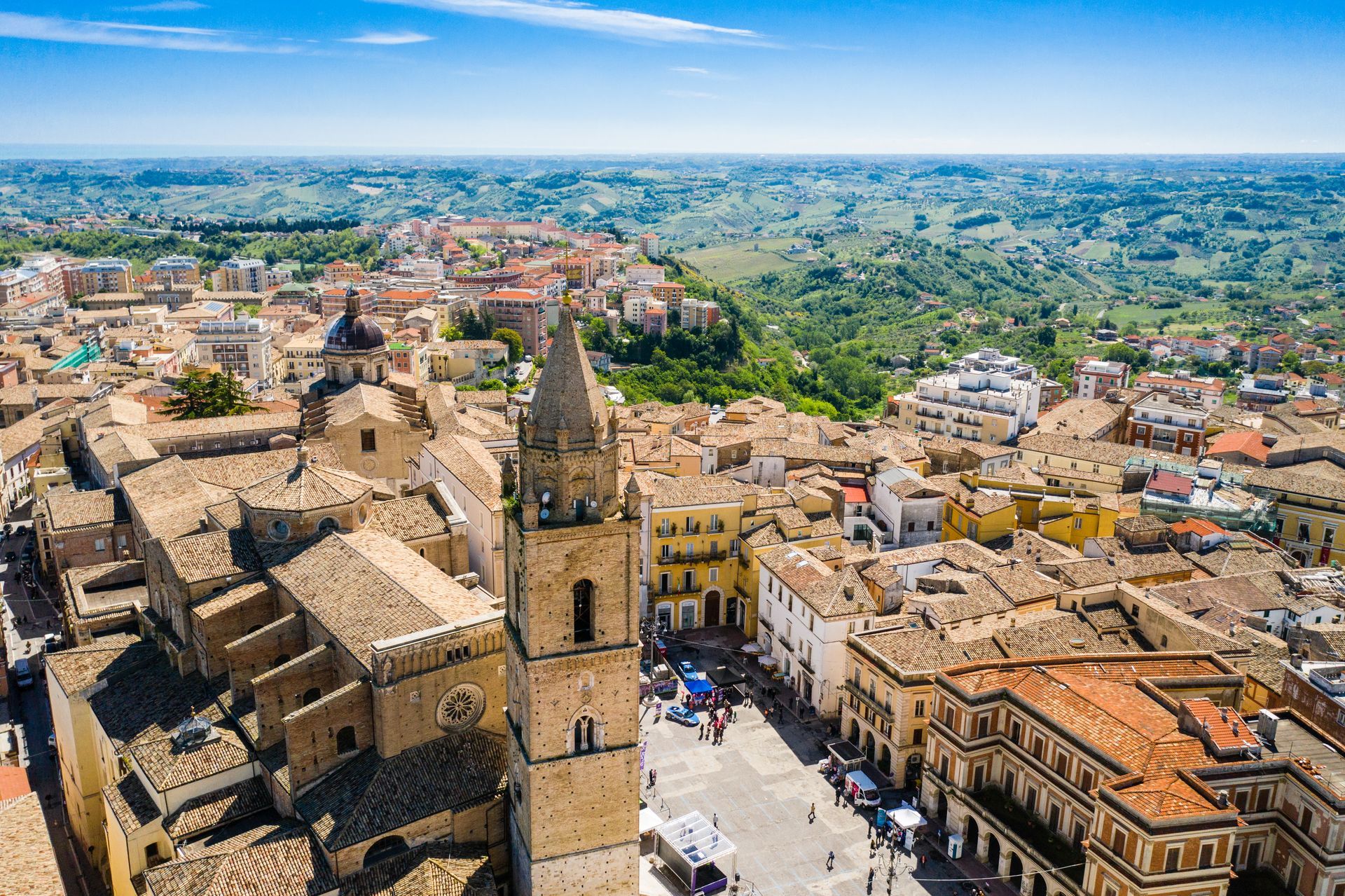
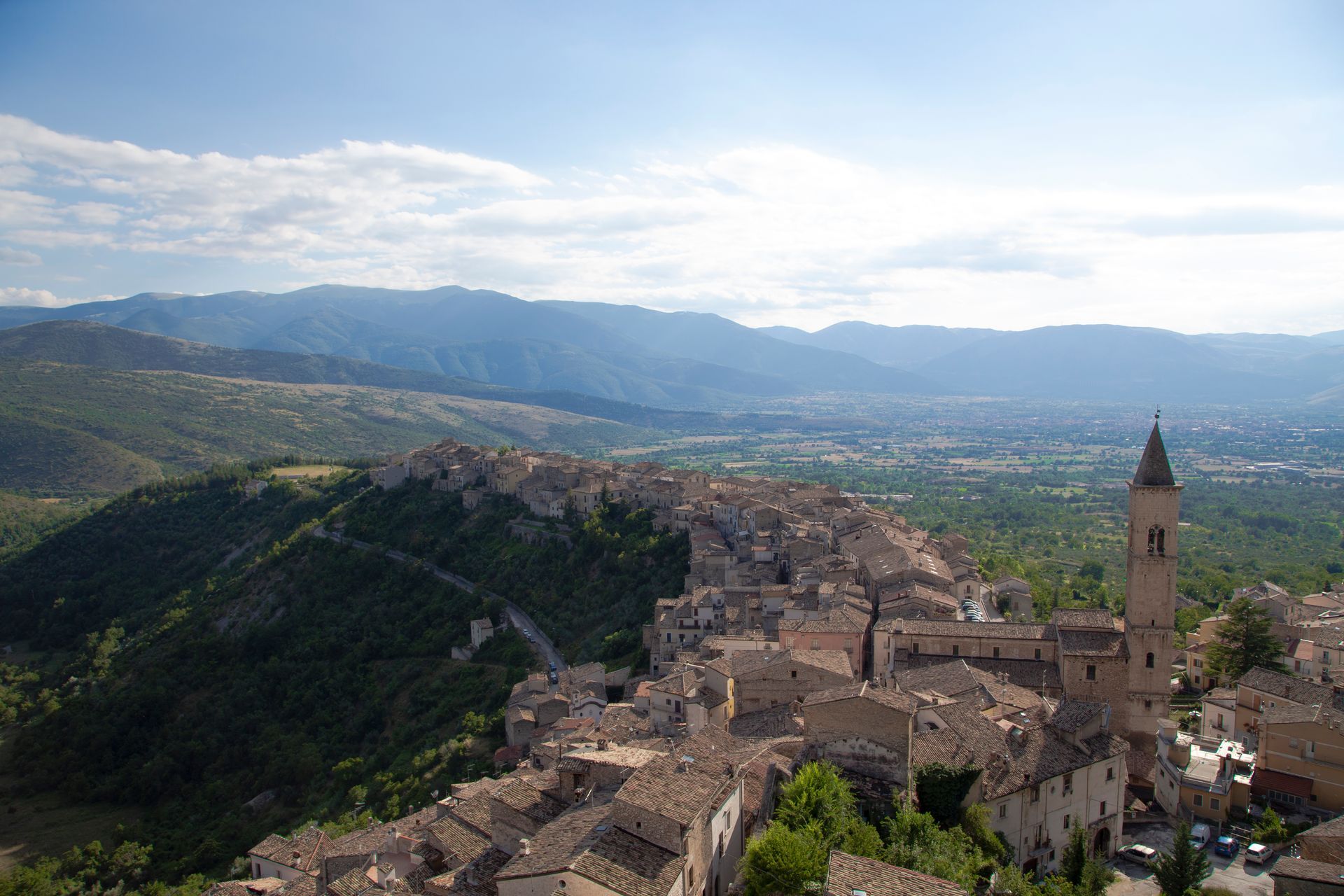
L'Aquila, if you haven't been, sits in a high bowl of the Abruzzo Apennines, with the Gran Sasso massif standing over it like a wall. In the thirteenth century it was still a young city, founded around 1254 by dozens of smaller mountain settlements banding together, the way villages do when they realise they are stronger as one town than as ninety-nine hamlets, something close to a federation, centuries before the word carried that meaning.
A young city needs a story. L'Aquila's arrived in the person of Pietro Angelerio, known to history as Pietro da Morrone, a hermit-monk who had spent most of his adult life in caves and hermitages scattered across these same mountains, first on the Maiella, later at the hermitage of Sant'Onofrio, cut into the rock face above Sulmona. Around 1275, the story goes, Pietro passed through L'Aquila and had a dream of the Virgin Mary, who asked him to have a church built on the hill of Collemaggio, just outside the city walls. He did. The Basilica of Santa Maria di Collemaggio was consecrated in 1288, its facade built from pink and white local stone in a geometric pattern that still looks strikingly modern six centuries later.
Neither Pietro nor the city had any idea, at that point, what would happen next.

Celestine V: the pope who was a hermit first, and stayed one at heart
In July 1294, the cardinals had spent over two years failing to elect a new pope. Deadlocked and exhausted, and according to at least one account nudged along by a letter warning of divine displeasure, they turned to an outsider: the elderly hermit from the Abruzzo mountains, by then well into his eighties, known locally for his austerity and his visions. Pietro da Morrone became Pope Celestine V.
He did not travel to Rome. He rode a donkey to L'Aquila instead, accompanied by King Charles II of Anjou, and was crowned in the basilica he himself had ordered built, Santa Maria di Collemaggio, on 29 August 1294, in front of a crowd said to number around 200,000 people. For a city not yet fifty years old, this was extraordinary. A coronation of this scale simply didn't happen outside Rome, and it put L'Aquila on the map of Christendom overnight.
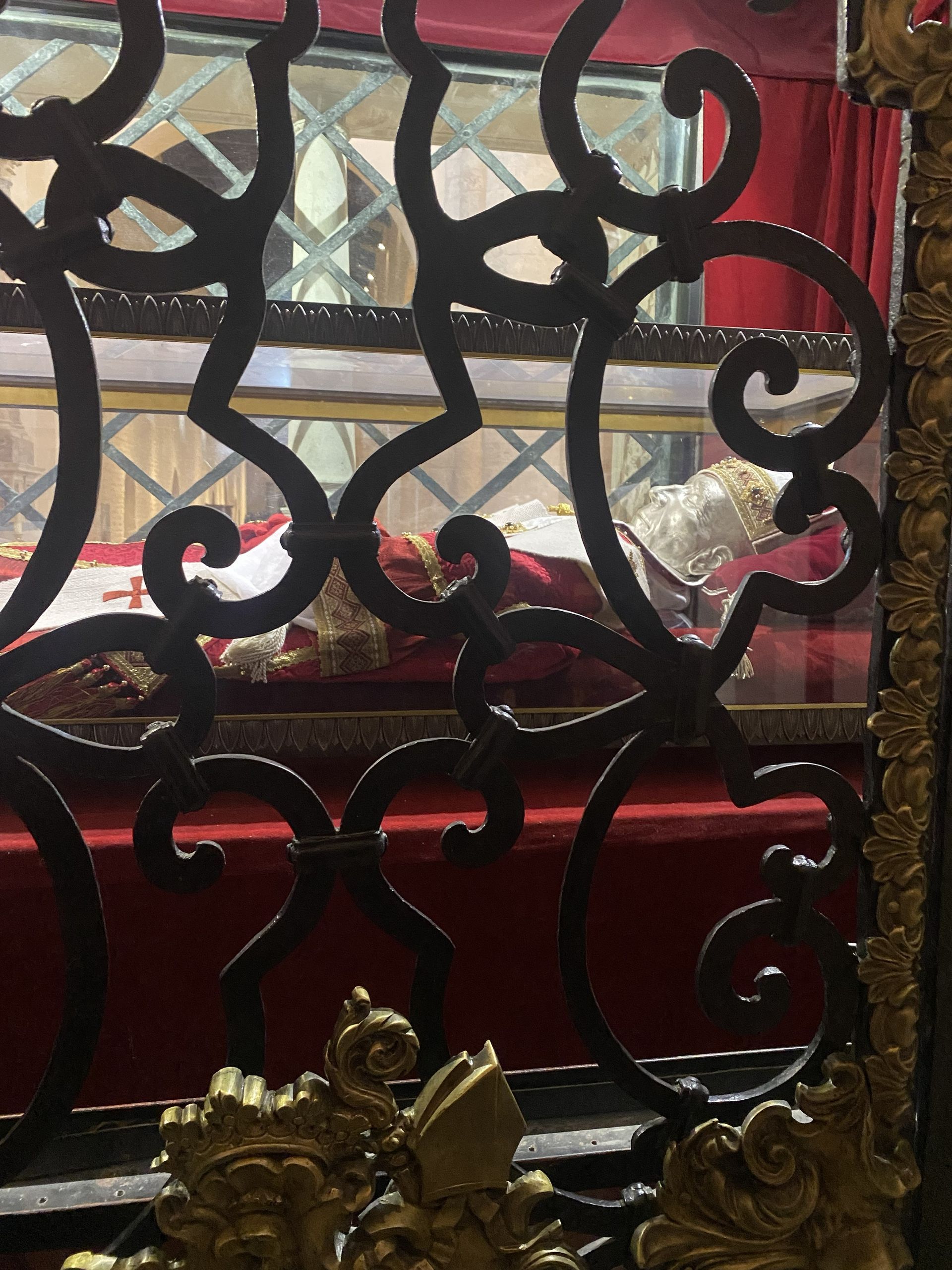
Celestine's papacy lasted a little over five months. By every account he was a poor fit for the job, a man used to silence and solitude, thrown into the politics of a medieval court he had no appetite for. In December 1294 he did something no pope had ever done voluntarily: he resigned. Dante, writing a few years later, is widely believed to have had Celestine in mind when he condemned in the Inferno "colui che fece per viltade il gran rifiuto", the one who, out of cowardice, made the great refusal. History has been kinder to him since. The Catholic Church canonised him a saint in 1313, and plenty of modern readers see his resignation less as cowardice than as a rare act of self-knowledge from a man who simply wanted his mountains back.
He never got them. His successor, Boniface VIII, had him confined, and Celestine died in custody in 1296. But before any of that, in the last weeks of a papacy he hadn't asked for, he left L'Aquila something that outlived every pope who came after him for the next seven centuries.
The Bull of Forgiveness: a pardon with no exceptions
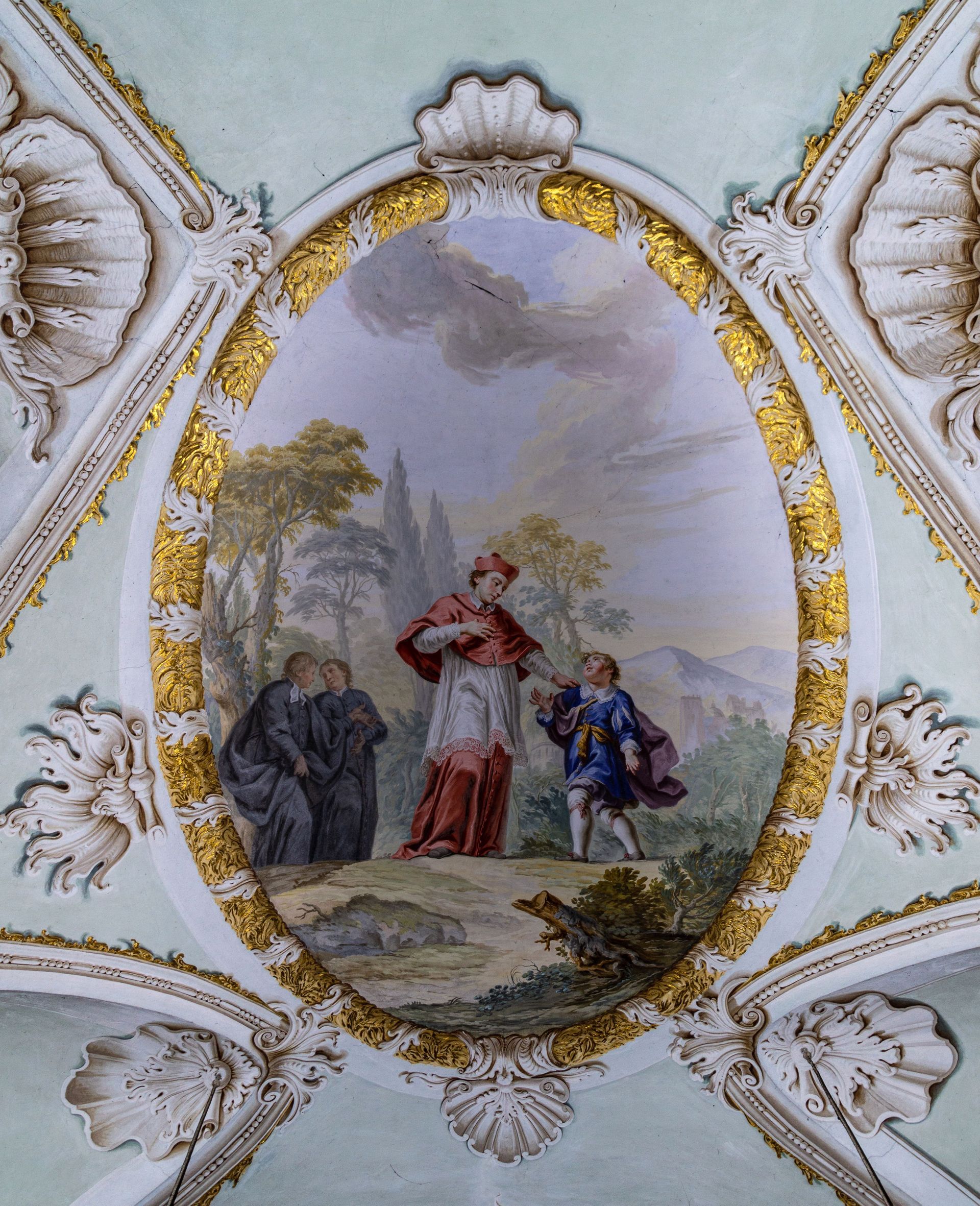
On 29 September 1294, Celestine V issued the papal bull Inter Sanctorum Solemnia, known today as the Bull of Forgiveness. In plain terms, it granted a plenary indulgence, the full remission of sin in the eyes of the Church, to anyone who entered the Basilica of Santa Maria di Collemaggio between the evening of 28 August and the evening of 29 August, on two conditions only: genuine repentance, and confession.
Nothing more than that: no pilgrimage to Jerusalem, no crusade, no payment, no rank. Up to that point, plenary indulgences of this kind had mostly been reserved for crusaders or for wealthy pilgrims who could afford the journey to places like Assisi. Celestine's bull extended the same grace to everyone: the poor, the powerless, anyone who could reach L'Aquila and walk through that door with an honest heart. Historians generally consider it the direct forerunner of the first universal Holy Year, which Pope Boniface VIII would establish in Rome six years later, in 1300.
It's worth pausing on how radical that was for its time, and also how simple. This wasn't really a document about doctrine so much as about access, the idea that forgiveness shouldn't have a price tag or a waiting list. It's a nice thing to know about a city before you walk into it.
Boniface VIII, incidentally, tried to have the bull annulled the following year. The people of L'Aquila held onto it anyway, and carried it to the basilica regardless. They have been doing so, in one form or another, ever since.
This year is the year of L'Aquila
The parade: how L'Aquila still carries the Bull today
This is the part visitors actually see, and it's worth knowing the choreography, because none of it is arbitrary.
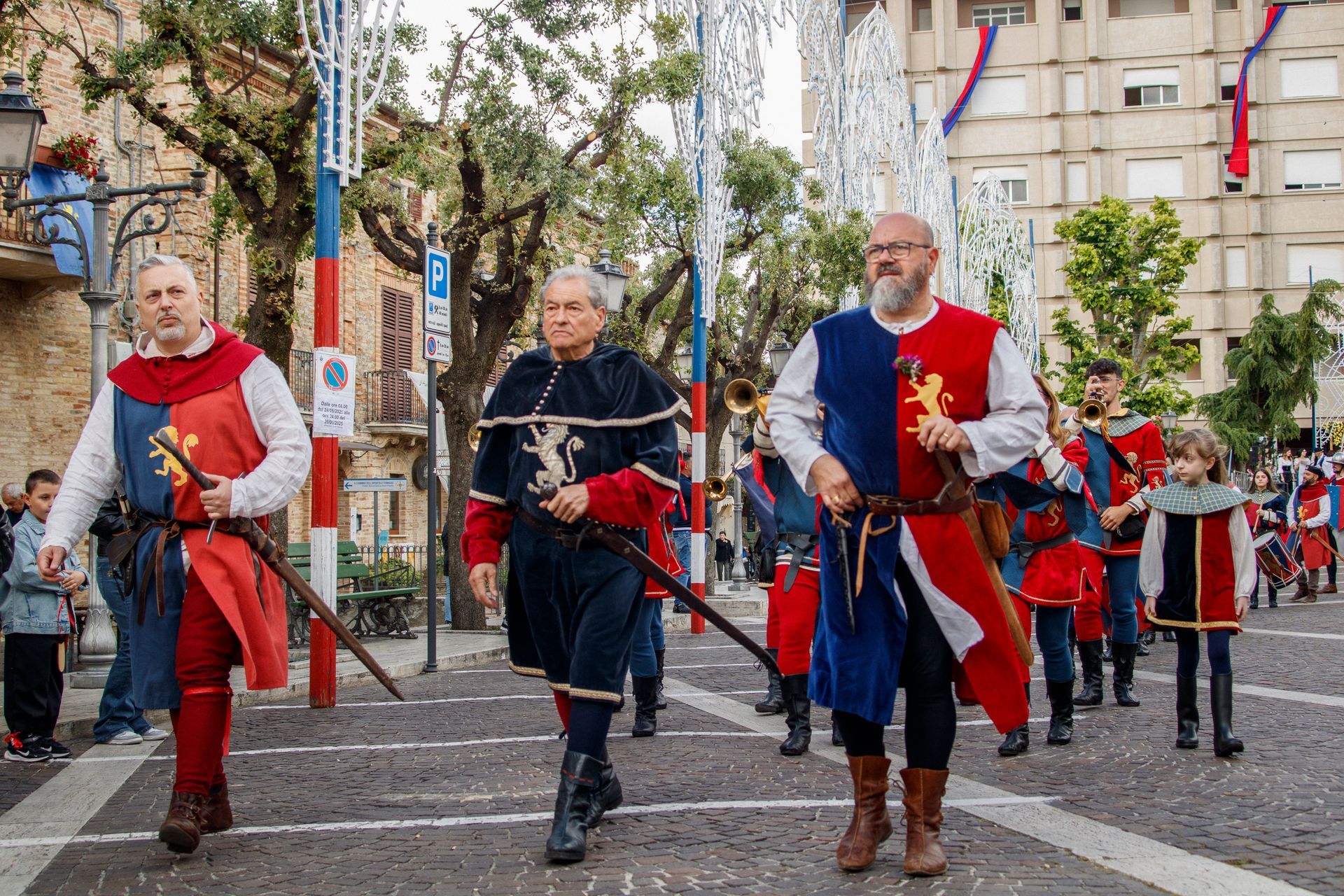
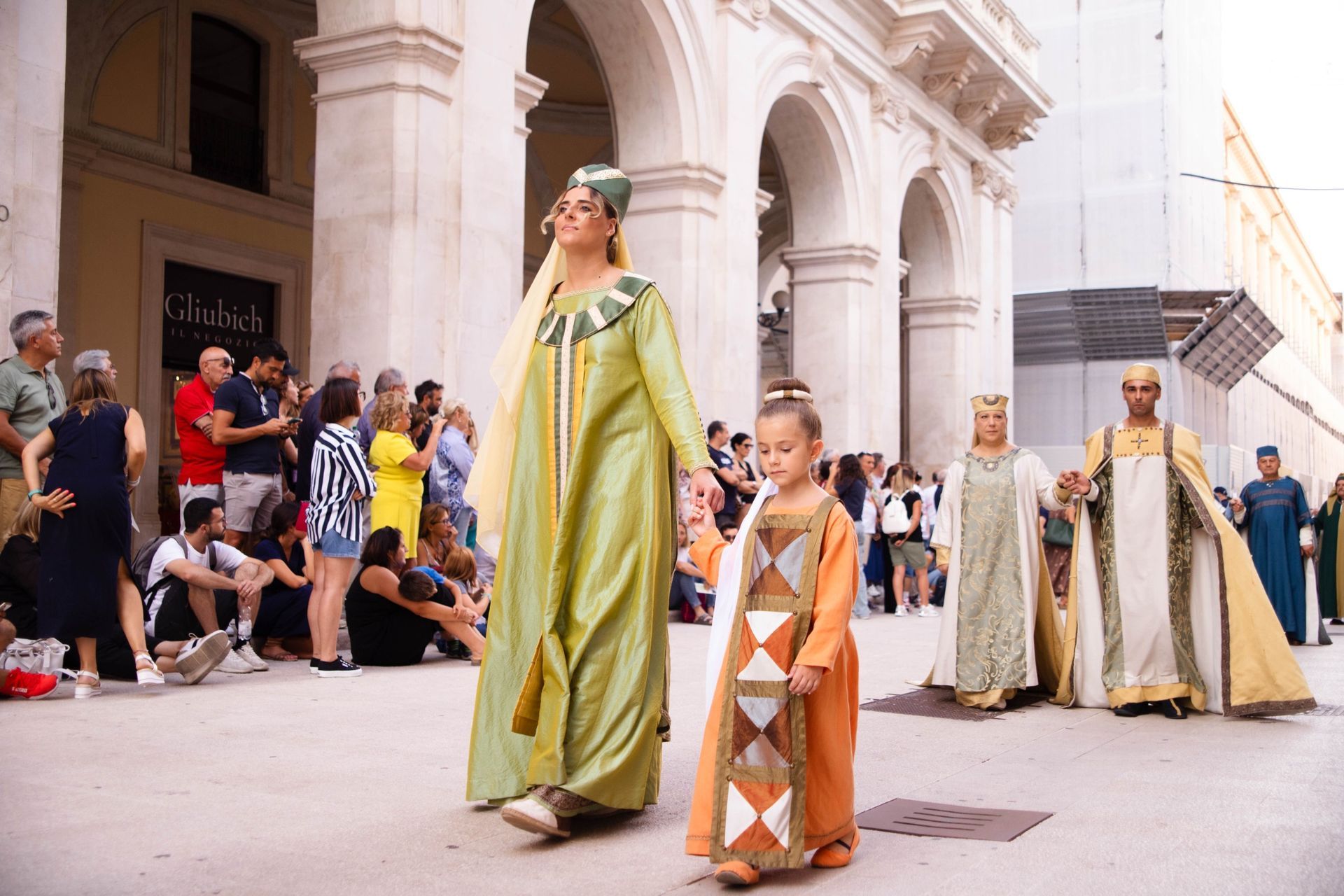
Each year around 28 August, the Historical Parade of the Celestinian Bull carries the original papal document (these days a faithful reliquary case, since 1997, for conservation reasons; the fragile original stays safely archived) from the Palazzo del Magistrato through the historic centre to the parvis of the basilica at Collemaggio. Hundreds of local residents take part in fifteenth-century costume, but three figures carry the story:
- The Lady of the Bull, a young woman entrusted with carrying the case containing the document itself, accompanied by the Mayor of L'Aquila.
- The Young Lord, who walks beside her carrying an olive branch.
- The Lady of the Cross, who carries a gift of thanks for the ceremony to come.
At sunset, a cardinal designated by the Holy See knocks three times on the Holy Door of the basilica with that same olive branch. The door opens. The bull is read aloud, in public, and symbolically consigned to the Church of L'Aquila, much as it was in 1294. The door then stays open for a full day and night, until sunset the following evening, when an archbishop presides over the closing ceremony and it shuts again for another year.
Before all of that, on the festival's opening day, there's a quieter ritual that visitors sometimes miss: the Flame of Morrone. Torchbearers light a flame at the hermitage where Celestine once lived near Sulmona and carry it, on foot, all the way to L'Aquila, where it lights a tripod on the city's civic tower. A direct, physical thread between the hermit's mountain and the city he crowned.
The modern week around these ceremonies has grown, understandably, into something livelier, with concerts, guest performers, and an opening broadcast that draws a national audience. None of that changes what the week is really about, though a city keeping a seven-century tradition alive is entitled to enjoy itself while doing so.
A door worth knowing about before you visit
You don't need to be religious to find something worth sitting with here. The Perdonanza is, at its core, a story about a man who preferred silence to power, and a city that turned his one act of radical generosity into the thing it's still known for, seven hundred years on. Whether or not you walk through the Holy Door yourself, it's worth knowing what it took to open it: a hermit's dream, a five-month papacy, a bull nearly torn up, and generations of Aquilani who simply refused to let it go.
If you're planning to be in Abruzzo when it happens, the Perdonanza runs roughly from 23 to 29 August each year, with the parade and the opening of the Holy Door on the evening of the 28th. It's one small piece of a much larger story we love telling about this region, the mountains, the hermitages, the borghi that shaped it. As always, we'd rather show it to you slowly than summarise it in a brochure.
Check our experiences and packages for you
Our Frequently Asked Questions
What is the Perdonanza Celestiniana?
It's the week-long celebration held every August in L'Aquila to mark the Bull of Forgiveness, issued by Pope Celestine V in 1294. It centres on the Historical Parade of the Celestinian Bull and the opening of the Holy Door at the Basilica of Santa Maria di Collemaggio, and has been recognised by UNESCO as Intangible Cultural Heritage of Humanity since 2019.
Who was Pope Celestine V?
Born Pietro Angelerio and known as Pietro da Morrone, he was a hermit-monk who spent most of his life in mountain hermitages across Abruzzo. Elected pope at around eighty-five, he was crowned in L'Aquila in August 1294, resigned after just over five months, and was later canonised a saint in 1313.
What is the Bull of Forgiveness?
It's the papal bull Inter Sanctorum Solemnia, issued by Celestine V on 29 September 1294. It granted a plenary indulgence to anyone who entered the Basilica of Santa Maria di Collemaggio between the evening of 28 August and the evening of 29 August, provided they were truly repentant and confessed, with no distinction of wealth or rank.
When does the Perdonanza take place, and can anyone attend?
It runs each year from around 23 to 29 August, with the Historical Parade of the Celestinian Bull and the opening of the Holy Door on the evening of the 28th. The parade and the closing ceremony the following evening are open to the public and free to attend; entering the basilica through the Holy Door doesn't require you to be Catholic, only respectful of what the moment represents to those who are.
What happens during the Historical Parade of the Celestinian Bull?
Hundreds of Aquilani in fifteenth-century costume accompany the Bull, carried in its reliquary case by the Lady of the Bull, from the Palazzo del Magistrato to the Basilica of Santa Maria di Collemaggio. At sunset, a cardinal knocks three times on the Holy Door with an olive branch carried by the Young Lord, and the Bull is read aloud before the door opens.